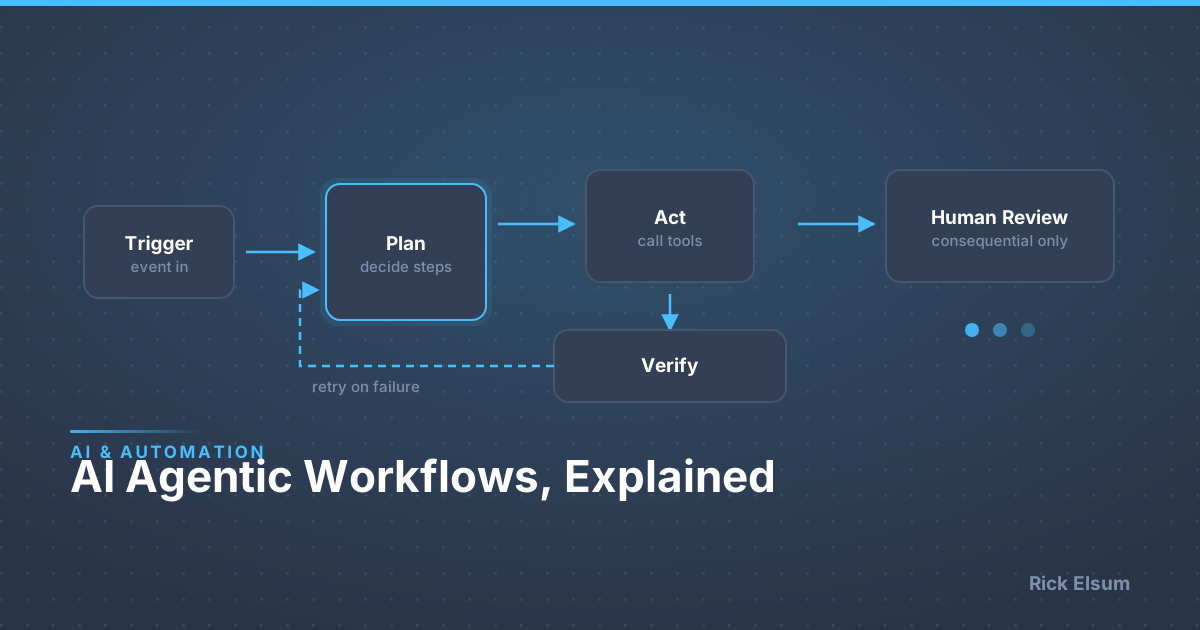
AI Agentic Workflows: The Future of Business Automation
Traditional automation follows rigid rules: "if this, then that." AI agentic workflows are different—they think, adapt, and act.
What Are AI Agents?
An AI agent is software that:
- Perceives its environment (reads emails, monitors systems, analyzes data)
- Reasons about what actions to take (makes decisions based on context)
- Acts autonomously (executes tasks without human intervention)
- Learns from outcomes (improves over time)
Think of it as having a smart assistant who actually understands your business and can handle complex tasks independently.
Real Business Applications
1. The Autonomous Safety Officer (Mining)
Traditional Approach:
- Workers fill out paper hazard reports
- Safety officer manually reviews each one
- Patterns only emerge after incidents occur
AI Agentic Workflow:
- AI agent automatically ingests incident reports from multiple sources
- Analyzes patterns across thousands of reports in real-time
- Identifies emerging risks before they cause accidents
- Automatically alerts relevant managers with specific recommendations
- Generates compliance reports without human intervention
Result: 70% reduction in paperwork, proactive risk prevention, fewer accidents.
2. Intelligent Document Review (Legal)
Traditional Approach:
- Junior lawyers spend weeks reading thousands of pages
- Manual note-taking and cross-referencing
- Easy to miss critical details
AI Agentic Workflow:
- AI agent reads all case documents (police reports, medical records, witness statements)
- Builds timeline of events automatically
- Identifies contradictions and inconsistencies
- Links evidence to legal arguments
- Flags items requiring human lawyer review
Result: Document review goes from weeks to hours, nothing gets missed.
3. Smart Trading Bot (Cryptocurrency)
Traditional Approach:
- Pre-programmed trading rules that can't adapt
- Manual monitoring required during volatile periods
- Misses opportunities when you're not watching
AI Agentic Workflow:
- AI agent monitors multiple exchanges 24/7
- Adapts strategy based on market conditions
- Manages risk dynamically
- Executes trades when opportunities arise
- Learns from market patterns to improve performance
Result: Never miss opportunities, better risk management, improved returns.
How Agentic Workflows Differ from Regular Automation
| Traditional Automation | AI Agentic Workflows |
|---|---|
| Follows fixed rules | Adapts to context |
| Breaks when things change | Handles unexpected situations |
| Requires detailed programming | Learns from examples |
| Does one thing repeatedly | Completes complex multi-step tasks |
| Needs constant human oversight | Operates autonomously |
The Technology Stack
Building effective AI agents requires:
- Large Language Models (LLMs) - For understanding and reasoning
- Vector Databases - For efficient knowledge retrieval
- Integration Layer - Connects to your existing systems
- Orchestration Engine - Manages multi-step workflows
- Monitoring & Control - Ensures agents stay on track
Security Considerations
Critical: AI agents need access to your systems to be useful. This means:
- Authentication - Secure credential management
- Authorization - Limiting what agents can access
- Audit Trails - Tracking every action taken
- Human Oversight - Critical decisions require approval
- On-Premises Deployment - Keep sensitive data under your control
Getting Started
Not every business process needs AI agents. Good candidates are tasks that:
- Are repetitive but require judgment
- Involve multiple data sources that need synthesis
- Require 24/7 monitoring or response
- Have high knowledge work content but low true creativity
- Currently consume significant staff time
The ROI Question
Real examples from our clients:
- Legal services: $200K+ annually in reduced document review time
- Mining operations: $500K+ annually in prevented downtime
- Crypto trading: 15-30% improvement in trading returns
- Healthcare providers: 10-15 hours per week per clinician saved
But the real value isn't just cost savings—it's scaling your expertise. One experienced professional can now oversee AI agents handling 10x the workload.
Common Pitfalls to Avoid
- Starting too big - Begin with one well-defined workflow
- Ignoring data quality - Agents are only as good as their information
- No human oversight - Critical decisions need approval workflows
- Cloud-only thinking - Sensitive processes need on-premises deployment
- Expecting perfection - Plan for iteration and improvement
The Future is Already Here
AI agents aren't science fiction—they're production systems running in businesses today. The question isn't whether to adopt agentic workflows, but which processes to automate first.
Companies that embrace this technology now will have a 2-3 year advantage over competitors still doing things manually.
Ready to implement AI agentic workflows in your business? Let's talk about your specific needs.